Garmin Golf
- 4.7
- Rating
- 1.00M
- Installs
- Free
- Price

 Analysis by App-foxy
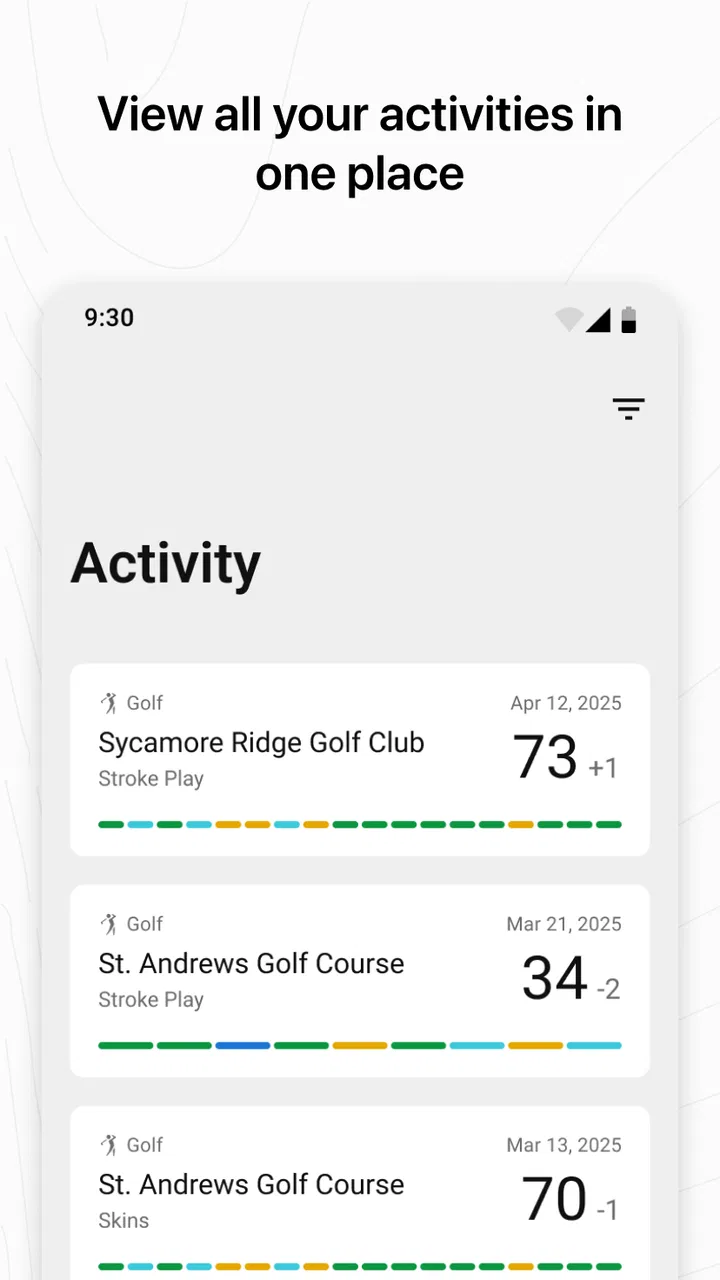
Golf apps often promise to make a round more social, but I found Garmin Golf more useful when I treated it as a companion for the whole playing routine rather than as a simple scorecard. It is a free sports app from Garmin, built around competing with friends and other golfers. That focus gives it a clear identity: it is less about teaching every part of the game and more about keeping rounds connected, comparable, and easier to follow.
I would recommend it most strongly to golfers who already use Garmin equipment or regularly play with friends who do. The experience makes more sense when your golf activity is part of a wider Garmin setup. If you only want a basic way to write down strokes, a simpler scorekeeping tool may feel quicker. If you want a broad training platform, another golf app may offer a deeper learning focus. Garmin Golf sits in between those choices, with its strongest appeal coming from social competition linked to your golf routine.
What using Garmin Golf feels like in everyday play
My first impression is that the app has a practical, no-nonsense character. Garmin is the developer, and the product feels designed for golfers who want information organized around actual rounds rather than endless browsing. The store summary highlights competition with friends and fellow golfers, and that is still the best way to understand its purpose. You are not opening it simply to pass time; you are opening it because a round, a group, or a personal comparison matters.
You May Also Like

 Blood Strike: 2.5 Anniversary
Blood Strike’s Loadouts Turn Every Drop Into a Tactical Gamble
A close look at Blood Strike’s custom loadouts: how fast access to signature weapons reshapes its battle royale rhythm, rewards preparation, and narrows the gap between fights.

 Pandora - Music & Podcasts
Pandora’s Music Is Easy to Start, but Harder to Recover
Pandora’s strength is its low-effort path from a seed to a station. Its weak spot is how much confidence it asks you to place in connection, setup, and quiet recovery.

 8 Ball Pool
 Is Built on Rivalries, Rematches, and Routine
A close look at the rivalries, rematches, shared routines, and unanswered safety questions that turn a quick pool match into a persistent mobile community.

 Samsung Music
’s Quiet Strength Is Playing What You Already Own
Its reach comes less from spectacle than from dependable access to a personal library. That simplicity is both the app’s strongest retention engine and its ceiling.

 AccuWeather: Weather Radar
AccuWeather Review: A Quick, Clear Forecast for Everyday Decisions
For everyday plans, the best forecast is the one you can understand quickly. AccuWeather makes rain timing, radar, and local conditions easy to act on, with a few trade-offs.

 Hill Climb Racing
Why Hill Climb Racing Still Turns Crashes Into One More Run
A tiny car, a bumpy hill and one more upgrade: Hill Climb Racing keeps resurfacing because its simple chaos makes every near-miss feel personal.
More From Our News Desk



The app belongs to the sports category and is free to install, with optional in-app purchases listed from $9.99 to $99.99 per item. That makes the initial decision easy: you can try the basic experience without paying at the door, then decide whether the broader Garmin ecosystem is worth spending money on. I appreciate that approach because golf software can be difficult to judge from screenshots alone.
It is rated for Everyone, which matches the straightforward nature of the app. The current version is 3.8.1, and the Android requirement is version 9 or later. In practical terms, that makes compatibility reasonably approachable for many Android users, although the age of a phone still matters when you are asking an app to stay responsive during a long outdoor session.
Speed expectations before you start a round
Garmin Golf is not the kind of app I would judge by whether every screen opens instantly. Golf rounds happen outdoors, often with changing connectivity, bright sunlight, gloves, and interruptions between holes. The more useful question is whether the app keeps the next action obvious and avoids making you fight the interface when your group is waiting. In that respect, its focused purpose is an advantage: there is less reason to wander through unrelated content.
For a normal round, I would prepare before reaching the first tee. Open the app, make sure the account side of the experience is ready, and check that any connected Garmin equipment you plan to use is recognized. That small routine reduces the chance of troubleshooting while your playing partners are already moving. It is also a better test of speed than opening the app for a few seconds at home, because golf use involves repeated pauses and resumptions.
One useful habit is to avoid treating the phone as the only place where every task must happen. If you are using Garmin hardware, let the device handle the moments when checking a phone would interrupt your rhythm, then use the app for the broader view afterward. This is one of the clearest trade-offs: the app becomes more valuable as part of a connected setup, while a phone-only user may find the experience less distinctive than expected.
I would not choose Garmin Golf for someone who wants a lightweight score note with no account setup, no social layer, and no interest in connected golf products. A minimal scorecard app can feel faster simply because it asks less of you. Garmin Golf earns its place when the extra context and competition are useful, not when you are trying to remove every step.
What happens during heavy-use moments
The demanding part of using any golf app is not one long continuous session. It is the repeated cycle of checking, entering, pausing, moving, and checking again. A round can stretch across several hours, and the app may be opened in short bursts rather than used continuously. That pattern makes preparation and recovery more important than flashy presentation.
My practical advice is to use the app deliberately between shots rather than during a rushed moment. Enter or review information when your group is already waiting on the tee or green, not while walking into position. This keeps the app from becoming a distraction and makes it easier to notice whether something has actually saved or updated. It also prevents a common mistake with sports apps: confusing a screen that is visible with information that has been properly recorded.
For groups, the competitive element can add motivation without turning every hole into a formal tournament. Friends can use the shared context to make an ordinary round more engaging, especially when everyone already knows one another’s habits. The social benefit is strongest when the group agrees beforehand how seriously to take the comparisons. Otherwise, a feature intended to add fun can create unnecessary pressure for casual players.
Another non-obvious use is reviewing a round after the social energy has gone. Instead of checking only the final result, I would use the post-round moment to notice patterns in how you play and what you tend to discuss with friends. The value is not just in seeing who finished ahead; it is in turning a single outing into a reference point for the next one. That makes the app more useful for recurring groups than for a one-off game with strangers.
Long sessions also expose the difference between an app that is merely attractive and one that fits real conditions. A bright outdoor environment, limited attention, and a phone that may already be handling other tasks all make unnecessary navigation costly. Garmin Golf’s focused sports purpose helps, but I would still keep the phone charged and avoid opening unrelated apps during a round. Those are ordinary precautions, yet they matter more here than they would for a quick indoor app.
Reliability, interruptions, and recovery
Reliability in golf is partly about what happens after an interruption. A call, a locked screen, a weak connection, or a change in how you move around the course can break the flow of a session. I would not assume that any golf app should be left unattended for hours without checking it. Instead, I recommend making a quick recovery check whenever you return: confirm that you are still on the right round, that the latest action is reflected, and that you have not accidentally moved into a different screen.
This habit is especially important for users who switch between a Garmin device and the phone. Connected products can be convenient, but they also create more points where a user may wonder which screen is current. The safest workflow is simple: choose one place for immediate round input, use the other for confirmation or broader review, and avoid entering the same information twice unless you are deliberately correcting something.
I also like the idea of doing a short pre-round test rather than waiting for the first real hole. That means opening the relevant golf area, checking the intended course or round context, and making sure your chosen workflow feels clear. It takes very little time and gives you a chance to stop if the setup is not behaving as expected. In my experience, this is more valuable than trying to solve a technical question while a group is ready to play.
The app’s popularity gives it a certain reassurance for people who want a mainstream golf companion: it has over a million installs, an average rating of 4.4, and around twenty-two thousand ratings. Those figures suggest that many golfers find the overall concept worthwhile, but they should not be read as a guarantee that every phone, connection, or playing style will feel identical. Golf environments vary too much for a store score to replace a personal trial.
There are also around one thousand nine hundred written reviews, which indicates that users have had enough experience with the app to comment beyond a first opening. I would still judge it against your own routine. A golfer who plays with Garmin equipment and enjoys friendly comparisons is likely to see more value than someone who only wants to record a number quickly and close the app.
Phone limits and the role of Garmin equipment
The Android minimum of version 9 is helpful, but operating-system compatibility is only one part of the experience. Older hardware may have less comfortable performance during a long outdoor session, especially if the phone is warm, low on storage, or handling several background tasks. I would not call Garmin Golf unusually demanding based on its category and purpose, but I would avoid evaluating it on a phone that already struggles with ordinary apps.
Screen size is another practical constraint. A larger display can make course-related information easier to inspect, while a compact phone may be more convenient to carry. That creates a real trade-off: the device that is easiest to keep in a pocket is not always the device that is easiest to read under bright conditions. If you dislike taking your phone out repeatedly, a compatible Garmin device may make the overall routine more comfortable, but the app itself should be seen as the coordinating layer rather than a replacement for every piece of hardware.
Battery planning deserves attention too. A golf session is long compared with the average app visit, and continuous outdoor use can be harder on a phone than checking messages indoors. I would begin with a healthy charge, limit unnecessary background activity, and avoid using the phone for unrelated media while playing. This is not a special Garmin requirement so much as a sensible way to protect the round from a dead device.
Storage and updates are worth considering before a trip or an important match. The current release is 3.8.1, so I would update at home rather than immediately before tee time. That gives you a chance to open the app once after updating and confirm that your normal workflow still feels familiar. It also avoids turning a routine round into a test of new software at the worst possible moment.
On iOS, the same broad judgment applies: the appeal is strongest when your phone is part of a wider Garmin habit. On Android, version 9 or later is the stated minimum, but real comfort will still depend on the phone itself. In both cases, I would prioritize a stable, familiar device over installing the app on an old spare phone simply because it is available.
Who will get the most from it
Garmin Golf is a strong fit for a regular group that wants a continuing competitive thread between rounds. It gives the social side of golf a defined place without requiring players to turn every outing into a formal event. If your friends already use Garmin products, the app is easier to justify because it can sit naturally alongside the equipment and habits you already have.
It is also a sensible choice for golfers who enjoy reviewing their activity after playing. The app’s value grows when you return to it, compare experiences with people you know, and use the record of a round as a conversation starter for the next one. That is different from a coaching-first app, where the main question is usually how to change a swing or structure practice.
I would be more cautious if you are a complete beginner looking for step-by-step instruction. Garmin Golf may support your playing routine, but its central identity is competition and golf tracking rather than a full teaching curriculum. A dedicated lesson or training app may be a better first download if your immediate goal is learning fundamentals.
I would also skip it if you play golf rarely, never compare rounds, and want the fewest possible setup decisions. The free price makes trying it low-risk, but free does not mean frictionless. The social and connected elements only help when you actually intend to use them. Otherwise, they can feel like extra structure around a task that could be handled more simply.
How it compares with simpler golf apps
Compared with a basic digital scorecard, Garmin Golf has a clearer social identity. A simple scorecard may win for speed and minimal effort, particularly when you are playing alone or do not care about longer-term comparisons. Garmin Golf wins when the round is part of an ongoing group habit and when connected Garmin equipment is relevant to the way you play.
Compared with a coaching-focused golf app, it is a different kind of tool rather than a direct substitute. Coaching apps are usually better for structured practice, drills, and technical improvement. Garmin Golf is more appealing when you want the round itself to be organized and socially meaningful. I would not install it expecting a complete replacement for a lesson plan.
Compared with a broad fitness platform, Garmin Golf has the advantage of being shaped around golf instead of treating the activity as just another workout. That specialization can make the experience feel more relevant on the course. The trade-off is that people who want one general app for many sports may prefer a wider platform and accept less golf-specific focus.
One practical comparison is ownership cost. The app is free to start, while optional purchases range from $9.99 to $99.99 per item. I would decide based on actual use rather than buying immediately: play a few rounds with the basic experience, see whether your friends participate, and only then consider whether paid additions or Garmin hardware make sense for you. That approach keeps the app from becoming an expensive solution to a problem you do not really have.
My performance verdict after weighing the trade-offs
My overall view is positive, but it is conditional. Garmin Golf is not compelling because it tries to do everything. It is compelling because it gives Garmin’s golf audience a focused place to connect rounds, friends, and competition. The experience should feel most comfortable when you prepare before playing, keep one clear workflow during the round, and review the result afterward.
For perceived speed, I would rate it as best suited to short, intentional interactions rather than constant phone use. For heavy sessions, preparation matters more than repeatedly reopening screens. For reliability, recovery checks are a smart habit whenever the app or connected equipment has been interrupted. For device demands, a modern, charged phone and a compatible Garmin setup will make more difference than chasing a particular setting.
The strongest hidden benefit is that it can turn separate rounds into a continuing social routine. The most important limitation is the same thing viewed from another angle: if you do not care about competition or connected golf, much of its purpose disappears. That is why I would recommend trying it to Garmin users and regular playing groups first, while pointing occasional solo golfers toward a simpler scorekeeping option.
Garmin Golf has been available since May 31, 2017, and its continued presence alongside a large installed user base makes it an established choice rather than an experimental newcomer. I would still make the decision based on your habits, not its age or popularity. The right question is whether you want a golf app that helps your rounds connect with other people.
In the end, Garmin Golf is worth downloading if friendly competition, Garmin equipment, and post-round comparison all sound useful to you. I would start with the free version, set up the app before your next tee time, and test it during an ordinary round rather than an important match. If it fits your group, it can become a natural part of playing. If all you need is a quick record of strokes, you will probably be happier with something leaner.
FAQs for Garmin Golf
01What features does the Garmin Golf app offer?
The Garmin Golf app provides a comprehensive range of features for golf enthusiasts, including detailed course maps, real-time scoring, statistics tracking, and performance analysis. It also offers tournament creation and participation, leaderboards, and compatibility with Garmin devices for enhanced data accuracy. This makes it a versatile tool for both casual players and competitive golfers.
02Is the Garmin Golf app compatible with all Garmin devices?
While the Garmin Golf app is designed to complement many Garmin devices, compatibility may vary depending on the model. Most recent Garmin golf wearables, such as the Approach series, sync seamlessly with the app. However, users should check the specific device compatibility on the Garmin website or within the app’s specifications before downloading.
03Does using the Garmin Golf app require a subscription?
The Garmin Golf app itself is free to download and offers a variety of features at no cost. However, some advanced functionalities, such as premium course maps and detailed analytics, may require in-app purchases or a subscription. Users are encouraged to explore the app's free features before deciding on any additional purchases.
04How accurate is the GPS and tracking on the Garmin Golf app?
The Garmin Golf app offers highly accurate GPS and tracking capabilities, especially when paired with compatible Garmin devices. The app provides precise yardages and mapping, which are regularly updated to reflect course changes. However, accuracy can be influenced by external factors like weather and device positioning, so users should ensure optimal conditions for best results.
05Can I use the Garmin Golf app without a Garmin device?
Yes, the Garmin Golf app can be used without a Garmin device. It still offers valuable features such as course maps, score tracking, and leaderboards. However, pairing with a Garmin device enhances the experience by providing more detailed performance data and insights, offering a more comprehensive golfing experience.
Pros
- Intuitive user interface for quick navigation.
- Comprehensive course database worldwide.
- Accurate shot tracking and analysis.
- Seamless integration with Garmin devices.
- Customizable scorecards and leaderboards.
Cons
- Requires premium subscription for full features.
- Occasional GPS connectivity issues.
- Limited offline functionality.
- Inconsistent app updates and support.
- High battery consumption during use.

Garmin Golf
Gallery